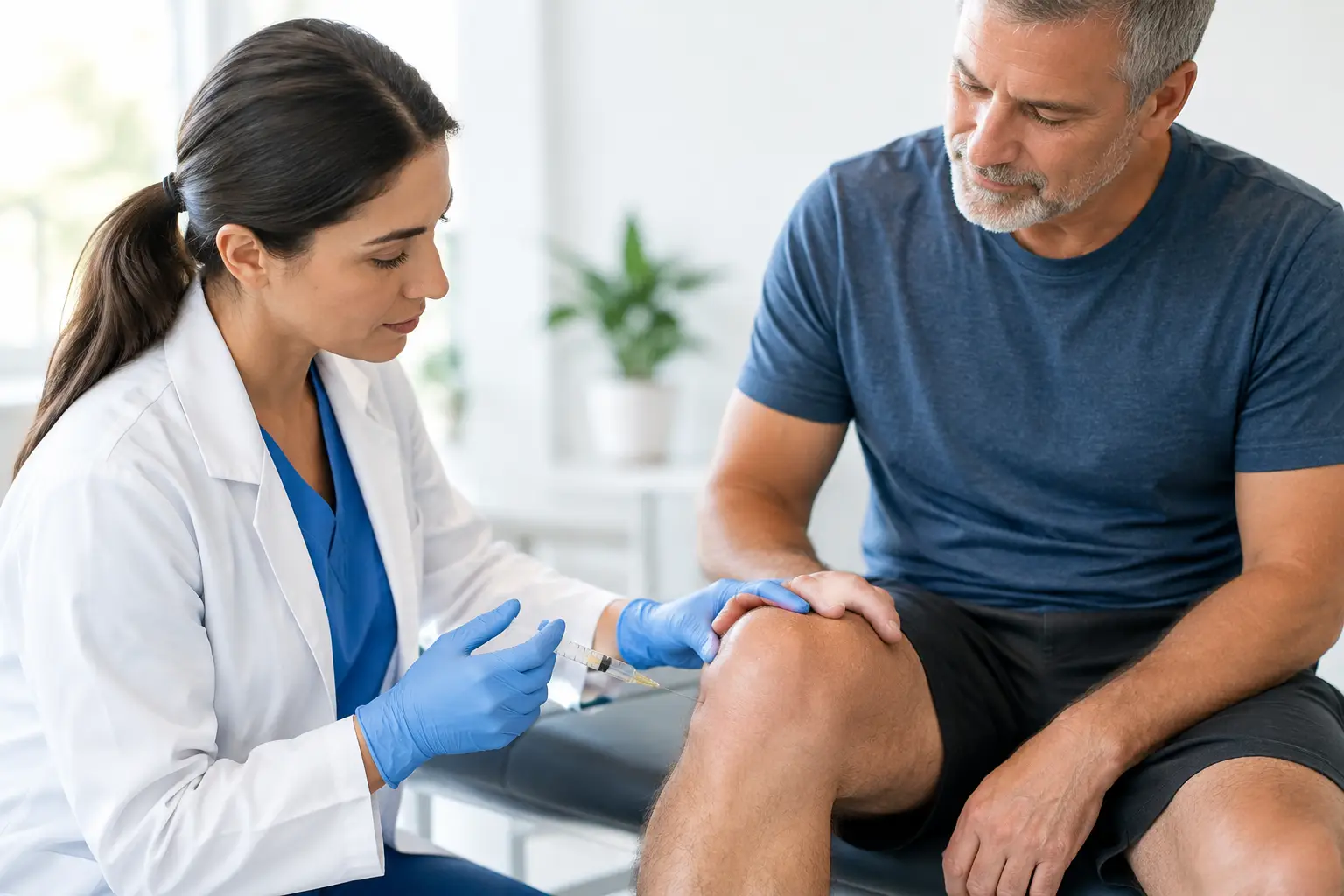
That familiar hesitation before taking the stairs, getting out of the car, or returning to a favorite workout can change the way you move through your day. PRP injections for knee pain are one option people explore when knee discomfort is limiting function, but they are not a one-size-fits-all answer. The right next step begins with understanding what is causing the pain and whether PRP fits your goals, health history, and knee condition.
What Are PRP Injections for Knee Pain?
PRP stands for platelet-rich plasma. Platelets are components of your blood that contain signaling proteins involved in the body's normal tissue response. During a PRP treatment, a clinician draws a small sample of blood and processes it to concentrate the platelet-rich portion. That preparation is then injected into a targeted area of the knee.
The appeal is straightforward: PRP uses a component of your own blood and may help modulate the local joint environment. For some people with knee osteoarthritis or certain soft-tissue concerns, it may be considered as part of a broader plan to improve comfort and function.
Still, PRP is not the same as rebuilding cartilage or reversing advanced arthritis. Research on PRP for knee osteoarthritis is promising in some groups, but protocols vary across studies. Preparation methods, platelet concentration, number of injections, and patient selection can all affect outcomes. A careful conversation matters more than a blanket promise.
Why Knee Pain Needs a Personalized Evaluation
“Knee pain” describes a symptom, not a diagnosis. The discomfort may come from osteoarthritis, a meniscus injury, tendon irritation, an old sports injury, patellofemoral pain, inflammatory disease, or a problem outside the knee itself. Each possibility calls for a different approach.
A personalized evaluation starts with your story. When did symptoms begin? Is pain worse with walking, squatting, sitting, or stairs? Does the knee swell, lock, buckle, or feel unstable? Your clinician may also review prior injuries, medications, activity level, weight changes, work demands, and previous treatment response.
A physical examination helps clarify joint motion, tenderness, strength, alignment, and stability. Imaging or additional diagnostic testing may be appropriate when symptoms suggest a structural injury or when the diagnosis is unclear. This process helps determine whether PRP is a reasonable option, whether another treatment should come first, or whether a referral is needed.
Urgent evaluation is appropriate for a hot, red, significantly swollen joint, fever, inability to bear weight after an injury, obvious deformity, or a locked knee. These symptoms should not be managed by simply scheduling an injection.
Who May Be a Candidate for PRP?
PRP may be worth discussing for adults with mild to moderate knee osteoarthritis whose pain continues despite sensible conservative care. It may also be considered in selected cases involving tendons or other soft tissues around the knee. The goal is usually improved day-to-day comfort and mobility, not a guarantee of complete pain relief.
Candidates often have clear functional goals: walking the neighborhood more comfortably, keeping up with family, returning to low-impact exercise, or reducing the knee pain that interrupts work and sleep. Those goals help guide whether treatment is worthwhile and how success should be measured.
PRP may be less likely to help when arthritis is severe, joint alignment is substantially altered, or pain is driven by a problem that needs a different form of care. Certain medical conditions, active infections, bleeding disorders, low platelet counts, and medications that affect bleeding or platelet activity may also change whether treatment is appropriate. Never stop a prescribed medication without guidance from the clinician managing it.
What the Appointment and Recovery May Look Like
After reviewing consent, medical history, and treatment expectations, the PRP process begins with a routine blood draw. The blood is placed in a centrifuge to separate and concentrate the desired plasma fraction. The clinician then prepares the knee and injects the PRP into the planned area, often using ultrasound guidance when it can improve accuracy.
The visit is typically completed in one appointment, although the full timeline can vary. Your care plan may recommend one injection or a series, depending on the clinical assessment and the protocol being used.
It is common to have temporary soreness, fullness, or stiffness in the knee after an injection. Many patients plan for a lighter schedule for several days, then gradually resume activity according to clinical guidance. A clinician may recommend avoiding certain anti-inflammatory medications around the procedure because they can affect platelet activity, but this advice must be individualized based on your medical needs.
Recovery is not simply a waiting period. The best plan may include progressive strength work, mobility exercises, activity modifications, sleep support, and attention to the movement patterns that keep aggravating the joint. An injection can be one piece of care. It is rarely the entire plan.
What Results Can You Realistically Expect?
PRP does not usually create an immediate change. Some people notice a temporary flare before improvement begins. If benefit occurs, it may develop gradually over several weeks to months rather than overnight.
Clinical studies have found that some people with knee osteoarthritis report better pain and function after PRP compared with certain other injection approaches. At the same time, results are not uniform, and the quality of evidence is affected by differences in study design and PRP preparation. That is why a clinician should discuss both the potential upside and the uncertainty before treatment.
A useful benchmark is functional change. Can you stand longer at work? Walk farther with less hesitation? Climb stairs with more confidence? Resume a consistent strength routine? Pain scores matter, but how your knee supports your actual life matters more.
How PRP Fits Into a Broader Knee Care Plan
The most effective knee strategy is often layered rather than singular. Depending on your evaluation, your plan may include targeted exercise, physical therapy, changes to training volume, supportive footwear, weight management when appropriate to your health goals, or medication options. For some patients, addressing sleep, stress, or overall conditioning also makes persistent pain easier to manage.
This broader perspective is especially valuable for active adults. Pushing through pain is not always productive, but neither is withdrawing from movement altogether. The aim is to find the right level of activity so the knee can build capacity without repeatedly being overloaded.
At Cyberdrip Health, a PRP consultation is designed to connect symptoms, history, diagnostics, and lifestyle goals. You should leave with a clear explanation of what PRP may offer, what it cannot promise, and what other options deserve consideration. That kind of clarity supports better decisions and more realistic confidence in the plan ahead.
Questions to Ask Before Scheduling PRP
Before deciding on PRP injections for knee pain, ask what diagnosis is being treated and how confident the clinician is in that diagnosis. Ask whether imaging or further evaluation is needed, what type of PRP protocol is planned, whether ultrasound guidance will be used, and how many injections may be recommended.
It is also reasonable to ask about expected recovery, costs, alternatives, and how progress will be tracked. PRP is commonly not covered by insurance, so understanding the financial commitment ahead of time is part of informed care. A trustworthy recommendation should make room for questions and should never pressure you into treatment.
Knee pain can make everyday life feel smaller than it should. A thoughtful medical evaluation can help you identify the source of the problem, consider whether PRP belongs in your care plan, and move forward with goals that are both meaningful and realistic. When your care is built around how you want to live and move, the future feels better.